
ABOUT JULIA
"A songbird of a jazz vocalist."
- The New York Times
"Native American jazz pioneer... Visionary Keefe continues to expand the jazz spectrum..."
- West Hawaii Today
"She gives me hope for the future of jazz."
- Judy Carmichael, NPR
"Her voice is of another era. One of the only jazz songbirds in Indian Country."
- Revolutions per Minute
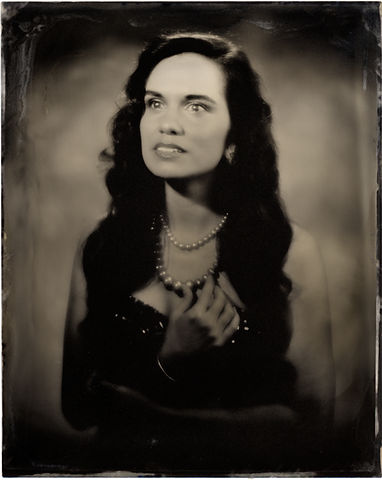
Julia Keefe is a New York City-based Nez Perce jazz vocalist, bandleader and educator. She leads the 16-piece Julia Keefe Indigenous Big Band and has spent much of her career championing Mildred Bailey, the pioneering Coeur d’Alene jazz vocalist. “Not only are Indigenous people in jazz, but jazz is in Indian country,” Keefe says.
The band has appeared at major institutions and festivals including the Kennedy Center’s Mary Lou Williams Jazz Festival and Monterey Jazz Festival. Its repertoire draws from generations of Indigenous jazz, from the music of Kaw/Mvskoke saxophonist Jim Pepper to contemporary work by Diné trumpeter-composer Delbert Anderson and Keefe herself, alongside Native Hawaiian repertoire. Keefe chose the term “Indigenous” to encompass Native American, First Nations and Native Hawaiian musicians and traditions. “Indigenous peoples are not monolithic,” she says. “We all have different cultural norms and practices, and we’re able to bring that diversity to our sound as an ensemble.”
Keefe was born in Seattle in 1989 and spent her earliest years in Washington, D.C., where her mother introduced her to Billie Holiday around age four. Neither parent was a musician, but music filled the house, from Leonard Cohen and Joan Baez to the Billie Holiday collection that became one of Keefe’s earliest touchstones. Around age five, the family moved to Kamiah, Idaho, on the Nez Perce Reservation. Keefe sang in the Nez Perce Presbyterian Church and grew up around tribal ceremonies and celebrations along the Clearwater River. By eight, she was singing publicly, including the national anthem at a major basketball game on the reservation.
When Keefe was about 11, the family moved to Spokane, and jazz quickly became her focus. She began competing at the Lionel Hampton Jazz Festival and, in 2007, won Outstanding Vocal Soloist in the alto division. By her early teens, she was sitting in with working musicians at Ella’s Supper Club. Around the same time, while reading about Bing Crosby, Keefe discovered Mildred Bailey, the Coeur d’Alene singer who grew up near Spokane and became one of the major jazz vocalists of the swing era. Bailey was the first Indigenous woman Keefe had seen reflected in the music she loved. By the end of high school, she had built a full program around Bailey’s repertoire and history, alongside her own experience as a contemporary Native jazz vocalist.
Keefe graduated from high school in 2007, spent a year at Catholic University of America, then transferred to the University of Miami’s Frost School of Music in fall 2008. She graduated with honors in 2012. At Frost, she sang in big bands and Latin ensembles, including salsa, Afro-Cuban, Afro-Peruvian and Brazilian music. Bassist and bandleader Chuck Bergeron brought her into his big band after seeing her lead a rhythm section during a workshop.
During college, Keefe also began advocating publicly for Bailey’s legacy. She presented a Bailey program at the Smithsonian’s National Museum of the American Indian and, in 2012, performed Bailey’s music for Idaho legislators while speaking about Bailey’s place in jazz and Indigenous history. The state subsequently honored Bailey and established April 30 as Mildred Bailey Day. Keefe later wrote publicly to Wynton Marsalis and the Nesuhi Ertegun Jazz Hall of Fame selection committee at Jazz at Lincoln Center, urging Bailey’s induction.


2021 Advancing Indigenous Performance Native Launchpad Recipient
2021 South Arts Jazz Road Creative Residency Recipient
2022 Chamber Music America Performance Plus Recipient
After college, Keefe spent several months performing in Paris and several years in Los Angeles, working across jazz, theater and film. She returned to Spokane in 2016 to teach jazz voice at Gonzaga University, then moved to New York the following year for a master’s degree at Manhattan School of Music, the only program she applied to. One of two vocalists accepted that year, she studied there with musicians including Theo Bleckmann, Jo Lawry, Dave Liebman and Stefon Harris.
As a survivor of sexual assault herself, Keefe has been outspoken in regard to the treatment of women in jazz, advocating for accountability and a cultural shift within jazz academia and the larger community — ensuring the bandstand, practice room, and classroom are safe spaces for women and nonbinary peoples. Keefe graduated in 2019 and has chosen to speak openly about her experience in solidarity with other survivors, particularly women in jazz.
That summer, Keefe recorded her first EP, Nobody Else But Me, and released it in February 2020. A month later, COVID-19 shut down live performance and touring. During lockdown, a mutual friend connected Keefe with Delbert Anderson. Their planned 30-minute conversation stretched to three hours as they talked about jazz and its history in tribal communities. Anderson floated the idea of an all-Native big band. The two later co-founded the ensemble, with Keefe as bandleader. In 2021, when South Arts announced its Jazz Road Creative Residencies program, Anderson encouraged her to apply.
Keefe’s proposal traced Indigenous participation in jazz partly through the boarding-school system, where Native children were taught Western music and instruments as part of assimilation programs. The history is personal: Keefe’s great-grandmother attended Carlisle Indian School in Pennsylvania and was sent to work in private homes in the Washington, D.C., area. Some students brought those musical skills back to their communities, where marching bands, dance bands and jazz ensembles developed on tribal lands.
South Arts awarded Keefe a $40,000 Jazz Road Creative Residencies grant. She recruited musicians through colleges, universities, Native student organizations and tribal communities, and commissioned arrangements of Anderson and Obomsawin’s music along with a new work by Pulitzer Prize-winning composer Raven Chacon. One 14-year-old musician in rural Oklahoma wrote her, “I thought I was the only Native who liked jazz.” The Julia Keefe Indigenous Big Band premiered at the Washington Center for the Performing Arts in Olympia, Washington, in May 2022.
Conceived as a one-off residency, the band continued, signed with a booking agency and began touring nationally. “The best thing that I feel that I can bring to this space is bringing other people together,” Keefe says. “The big band is not just a vehicle for creating music, but also a vehicle for building community.” They went on to appear at the Kennedy Center’s Mary Lou Williams Jazz Festival in 2024, following a weeklong Kennedy Center residency, and at Monterey Jazz Festival. That year, Keefe also released Mildred Bailey Project, supported by a Chamber Music America Performance Plus grant and documenting repertoire she had developed since her teens.
In May 2026, the Julia Keefe Indigenous Big Band released its debut studio album, Incarnadine. Its repertoire includes music by Jim Pepper, Anderson, Abenaki bassist-composer Mali Obomsawin, Queen Liliʻuokalani, Keefe’s own writing and Bailey’s “Rockin’ Chair.” “This album is a celebration, it’s a protest, it’s an act of defiance and resilience for Indigenous people,” Keefe says. “Indigenous people were here, Indigenous people are here, and we will continue to be here, take up this space, tell our stories and sing our songs in our own ways.”
Keefe is now developing a second big-band recording in response to the 250th anniversary of the Declaration of Independence, including its description of Indigenous people as “merciless Indian Savages.” She also hopes to convene an Indigenous jazz summit, bringing together musicians connected through the big band for rehearsals, writing and collaboration, with the larger aim of building what she calls the Indigenous Jazz Network. Keefe is also preparing another quartet recording centered more closely on Nez Perce melodies, Indigenous songs and prayers.
Keefe says, “Indigenous students found solace in music when they were torn from their families and forced into these colonial institutions, and brought that therapeutic form back to their communities, but we also know that music has been a healing and protective factor since before contact. In the midst of all of this trauma, whether it’s personal or a global trauma, we turn to music as our prayer. I’m honored that I get to be part of that prayer.”