FOR YOUR GRAMMY® CONSIDERATION
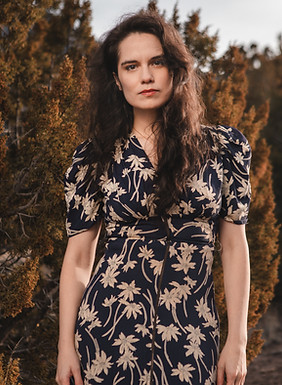
Julia Keefe Indigenous Big Band
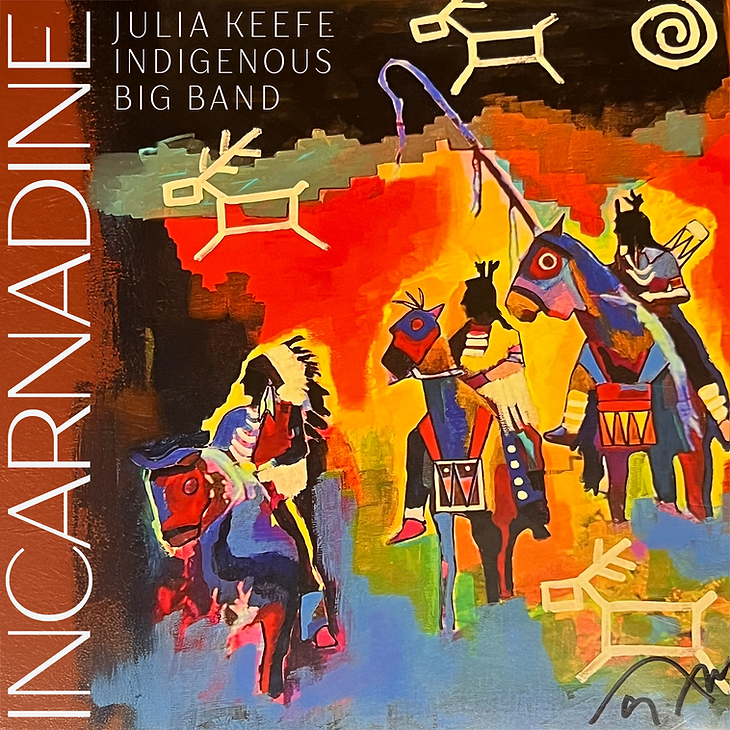
Incarnadine
Best Large Jazz Ensemble Album
Incarnadine
Best Jazz Performance
"Wawasint8da"
Best Arrangement, Instrumental or A Cappella
"DDAT mvt. 3 Iron Horse Gallup"
Arr. Franklin Piland
Best Arrangement, Instrumental and Vocals
"Wawasint8da"
Arr. Allison Burik
Album Credits
Director
Julia Keefe, Nez Perce, Vocals (tracks 1, 2, 8) and Background Vocals (track 3 only)
Rhythm Section
Marc Cary, Chappaquiddick Wampanoag, Piano
Mali Obomsawin, Abenaki of Odanak First Nation, Bass and Vocals (track 3 only)
Edward Littlefield, Lingít, Drums
Magdalena Abrego, Guitar (track 3 only)
Trumpets
Kalí Rodriguez, Taíno, Trumpet
Giovanni Martinez, Yaqui, Trumpet (tracks 4, 5, 6)
Delbert Anderson, Diné, Trumpet
Chuck Copenace, Ojibwe, Trumpet (tracks 1, 2, 3, 7, 8)
Trombones
Quinn Carson, Apache Tribe of Oklahoma and Kiowa Tribe, Trombone
Christopher Gonzales, Mestizo, Trombone
Wade Demmert, Lingít and Oglala Lakota, Bass Trombone
Woodwinds
Rogan Tinsley, Kanaka Moali, Alto Saxophone and Vocals (track 7 only)
Asa Peters, Mashpee Wampanoag, Alto Saxophone and Vocals (track 5 only)
Adam Lamoureux, Muskegon (Swampy Cree), Tenor Saxophone
Michael Gutierrez, Comanche and Cheyenne-Arapaho, Tenor Saxophone
Orion White, Nez Perce and Ottawa Tribe of Oklahoma, Baritone Saxophone
Produced by Julia Keefe & Quinn Carson
Recording Engineering by Brain Saia
Additional Tracking by Quinn Carson
Mix Engineering by Ken Rich
Mastering Engineering by Dave Darlington
Publicity by Lydia Liebman
"Incarnadine is one of the year's best jazz albums." - T. Larson, JazzViews
About the Band
“...a powerful and deeply human jazz album that blends Indigenous history, emotional storytelling, and masterful big band composition into one of the year’s most important contemporary jazz recordings... Incarnadine is not merely an important Indigenous jazz album. It belongs to that rare category of recordings capable of altering the broader understanding of what jazz history has been, and what its future may become. Albums like this do not simply accompany history. They enter it.”
-Thierry De Clemensat, Paris Move
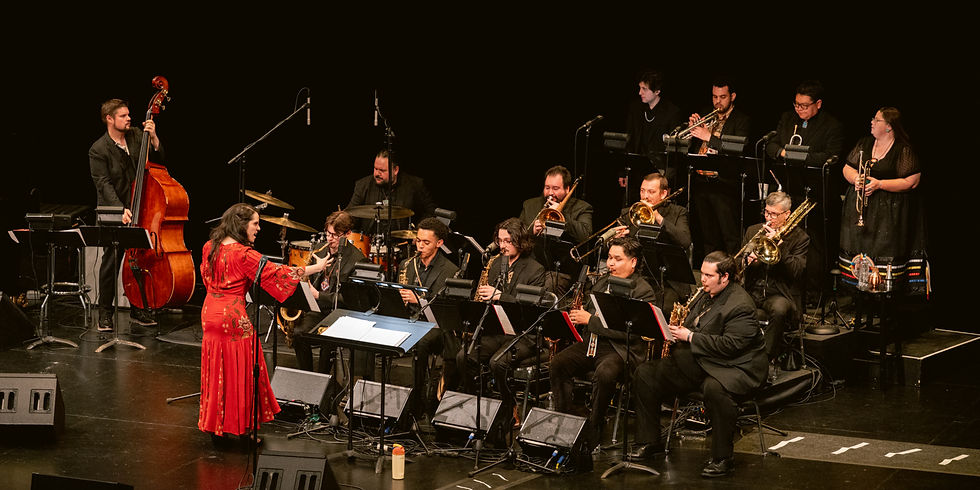
The Julia Keefe Indigenous Big Band (JKIBB) – one of the only jazz big bands in the world comprised exclusively of Native and Indigenous people – is released its debut album, Incarnadine, on May 8, 2026. Led by celebrated vocalist Julie Keefe (Nez Perce), Incarnadine brings together a 16-piece ensemble to celebrate a largely unrecognized lineage of Indigenous artists in jazz, while presenting new compositions rooted in tribal histories and storytelling. Following extensive touring at major performing arts centers and jazz clubs across the country, Incarnadine offers the ensemble's first recorded statement.
On Incarnadine, celebrated vocalist Julia Keefe leads her all-star Indigenous Big Band featuring pianist Marc Cary, trumpeter Delbert Anderson, bassist and vocalist Mali Obomsawin, trombonist Quinn Carson, drummer Edward Littlefield, and many more. “We are not culturally monolithic,” said Keefe. “We each bring with us the cultural practices of our ancestors and many of our compositions are derived from traditional melodies and stories. With Incarnadine, we dive deeper into improvisatory music from the Indigenous perspective.”
Reflecting on the album’s title, Keefe mused that “while a word from Shakespeare’s Macbeth might not immediately bring “Indigenous jazz” to mind, ‘incarnadine’ means to redden. I think in many ways, the word encapsulates the goals of this band and this album. We are shining a light on history which is fraught with bloodshed and trauma, but also celebrating the brilliance and resilience of Indigenous people who survived and thrived through the beauty of their culture, prayers, and songs. We are broadening the scope of the listener’s understanding of jazz to include Native and Indigenous jazz musicians. Some people say, ‘decolonize your mind’ and I say, ‘incarnadine your mind.”
The album features music made famous by Indigenous jazz musicians from the Twentieth Century such as Mildred Bailey (Coeur d’Alene) and Jim Pepper (Kaw/Mvskoke) but also amplifies new works from musicians within the band’s ranks. Obomsawin’s “Wawasint8da” is a haunting exploration of a Catholic hymn that was translated into the Abenaki language by an early French Jesuit missionary. DDAT Suite by Anderson pays homage to his tribal lands, commemorates Diné code talkers, and tells the story of an overnight train ride from Gallup, NM to Los Angeles. Keefe’s composition “Sonnet” was inspired by the poetry of Chilean poet Pablo Neruda. To quote the late Jim Pepper, “you can’t generalize about Indian music, it’s too diverse.”
“Incarnadine is musical commentary on our Indigeneity and resilience against the generational impacts of colonial powers upon the indigenous peoples of the Americas,” Keefe said. “Incarnadine offers musical history, protest, and celebration all wrapped up in one album.”
Incarnadine was recorded through the support of The Prior Performing Arts Center at the College of the Holy Cross.